The Examination of John Cage’s 4’33” and On The Ontological Analysis of Musical Works — Ali Yüceer
“Is John Cage’s 4’33’’ a musical work?” will be the initial question that I am going to examine in this paper. Depending on where my argument leads me, I will either decide it to be a musical work or not. Then, in the case that I consider it to be, I will further offer my opinion on his claim whether “everything we do is music” or not. In the case that I conclude 4’33” to not be a musical work, I will elaborate on the ontological framework of John Cage’s work. In order to build up my examination, I will rely on the groundwork laid out by Levinson’s “What a Musical Work Is” and Wolterstorff’s “Toward the Ontology of Art Works”.
I
Starting off, let’s briefly recall Levinson’s ontological framework regarding musical works. He initiates his argument by objecting against the claim that musical works are merely sound-structures. Right off the bat, I find this to be worthy of mention if I am going to consider 4’33” to be a musical work, since the work at hand includes, debatably, no sound structures at all, which I will also disagree with later in the paper. Levinson offers three objections to reveal that musical works should not be identified solely as sound-structures but should rather satisfy the following requirements with it: (1) creatability, (2) fine individuation, and (3) means of performance.
The first requirement actually relies on the traditional perception of art, which strictly assumes artworks to be acts of creation (Levinson, 1980). If it were that musical works are sound-structures alone, then there would remain the possibility that there may be previous exemplifications of it before it was composed. In this case, the composer becomes not a creator but merely a discoverer of the already existing sound structure. Driving from the unattractive idea, Levinson attempts to align musical works with creatable artworks as much as he can, suggesting that disregarding the sense of ‘creating’ takes away from the glory of the composers, which I tend to agree. Though it can be said that Levinson takes the requirement of creatability to be pre-assumed and touches upon it somewhat briefly, I will revisit the issue when I cover Wolterstorff’s say on this.
The second requirement comes into play when the possibility of “identical musical work composed by different composers” is raised. To prevent such unappealing cases, Levinson suggests that “distinct composers determining the same sound structure in fact inevitably produce different musical works” (Levinson, 1980, p. 10). This suggestion carries great importance because now he is able to highlight the importance of the musico-historical context of the composer and its reflection on each of their work. It leads the way for his claim that musical works are not just sound structures but also carry deeper artistic interpretations and intentions of their creator. Though one may face the counterargument that such musico-historical context “boils down to facts about their composers” and not the actual work, Levinson elavetes his perspective by saying that the originality of the composer is primary for the originality of the piece when identifying musical works. He states several examples suggesting that even if the composer x composed the same sound structure with composer y, their musical work would remain different, as they are crafted with different contextual influence as well as individualized intentions of each composer. With that he offers the requirement of fine individuation.
Lastly, Levinson brings about the issue that considering musical works as mere sound structures would imply the lack of involvement of any means of performance when identifying the work. This, Levinson finds problematic, as he argues that the act of instrumental and vocal exemplification of the work’s structure should be inseparable from the work itself. According to him, composers do not just ‘qualitatively’ produce the sound patterns, but rather specify certain instructions, through their score, regarding its production, which should be considered a part of the work. Following this, he finalizes the third requirement that musical works should include performance means to be considered as such.
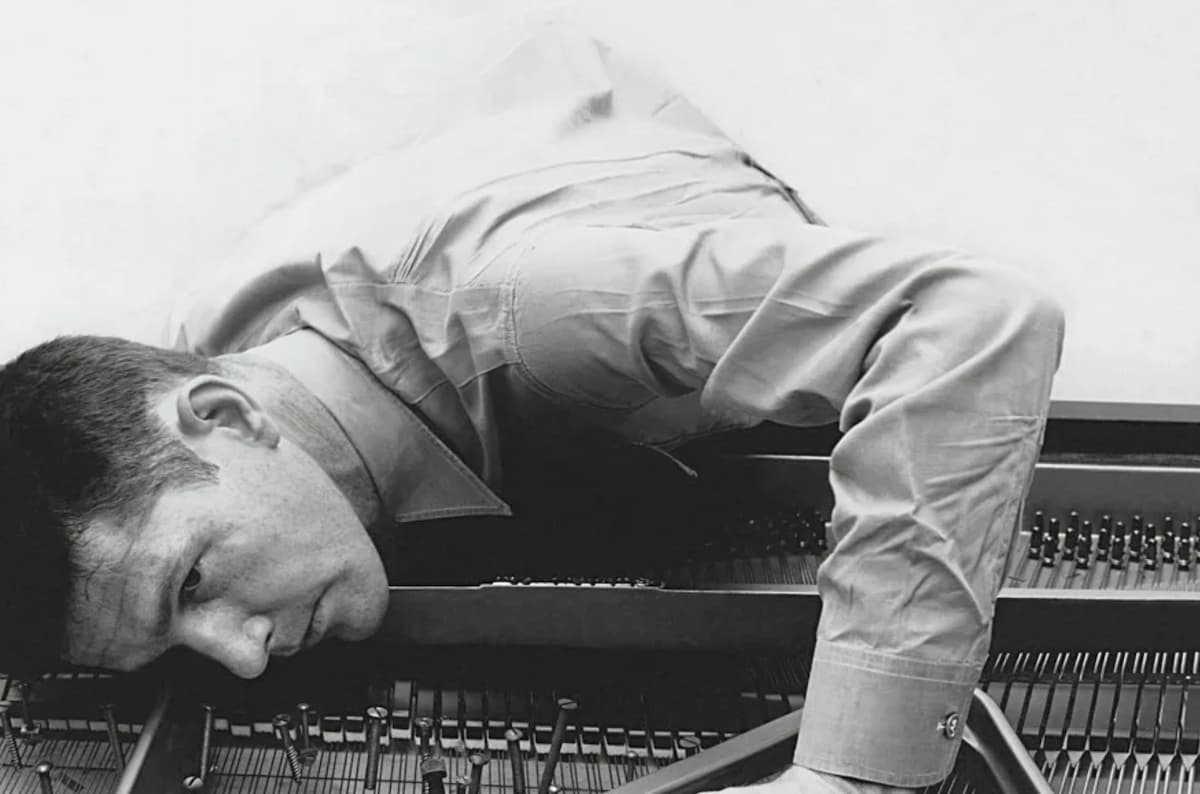
Now that we laid down the first section of the groundwork, let’s see if it can be applied to John Cage’s 4’33”. But, before moving on, let us attempt to tackle more of the issue of creation by what we have so far. Levinson, further in his argument, emphasizes that musical works are initiated types (Levinson, 1980). With that, it is fair to say that entities that are not initiated by someone should not be considered as a musical work. I find this somewhat enough to suggest that the creatability requirement goes hand in hand with the need for intention. The reason why Levinson brought it up in the first place was to dismiss the problem that “if we consider musical works to be sound-structures alone, then there rises the possibility that they have previously been exemplified”. With that being said, the simple groundwork we have becomes that the work at hand (1) must be brought into existence (with intention), (2) must include a certain sound and performance means structure, and (3) must be done by a person at a time. For 4’33”, the composer of the piece is John Cage, who composed his work with the intention to respond to the experimental nature of modern music and challenge the traditional perspectives of music-making. This, undoubtably carries an individualized artistic expression, satisfying the requirement of fine individuation. Second, there are instances of performances as well as instructions laid out by John Cage through his score to correctly present the structure at hand, which clarifies the requirement of performance means as well. Now for the criterion of creatability: In the case of John Cage, it is very plausible to think that a 4 minute and 33 seconds of silence could have been exemplified somewhere else before John Cage composed the work. So, did he actually bring it into existence by composing the score full of rest notes? Levinson does not elaborate as much on what it means to truly create, so I will take this evaluation further when I analyze Wolterstorff’s perspective. But for now, I will argue on behalf of John Cage’s creativity. I would consider those occurrences to be not of a musical work because, as I’ve brought about previously, they lack the intention of the composer. It only turned into a musical work when John Cage decided to set his structure into a score and perform it with the intention of crafting a musical work. So far, then, according to what Levinson had laid out before us, John Cage’s 4’33” can be considered as a musical work.
II
Now, let us uncover the perspective Wolterstorff introduces. The first point that I would like to bring attention to is the purpose of a score when questioning the identity of a musical work. I refuse to entertain any unrelated case where there is no score, and the work is still considered a musical one since the subject of our examination very well has a score. Wolterstorff approaches this topic from a similar standpoint to that of Levinson, claiming that the score carries the necessary instructions for producing instances of the sound-sequence at hand. After his claim, Wolterstorff drifts away to a unique perspective. He starts off by saying that sounds are only “sounded out” (Wolterstorff, 1975). Then, he proceeds to ask the question if music should be considered in terms of sounds or notes. Let’s carefully examine both possibilities in the light of John Cage’s 4’33”.
Considering music in terms of notes seem to be the easy way out, assuming that I take rests to be notes as well. Anything that can be appropriately reflected on a score, then, should be considered music. Therefore, such a perspective suggests John Cage’s work to be a musical one since the rests he uses are undoubtedly a part of composing music just like zero is part of making math. But how about considering music in terms of sounds? In the case of John Cage, one might argue that his work does not involve any ‘sounds’. Does this take away the musical identity of his work? I will disagree and suggest that we assign a broader meaning to what we call a sound in music. It should be considered to include both the ‘sounds we hear’, which are represented by notes/pitches, and the ‘sounds we don’t hear’ which are represented by rests that carry equivalent values to notes. The reason I take this to be is that if we refuse rests to be sounds, then we refuse them as notes as well which then leads to the conclusion that they should not be treated as a part of music-making. However, if it were the case, then in any musical work where the parts that include rests would interrupt the identity of the whole work, which in return would make it a non-continuous piece of music. I find this idea unattractive and inconvenient. Think of it in terms of math where we equate zero to rests in music. When we are asked if 101 is a number, we undoubtedly say yes, and consider it as a whole, not regarding zero as something that interrupts the identity of the whole number. Then we could also consider a musical work that involves rests as an uninterrupted sequence of sounds that include sounds we hear and sounds we don’t hear, as previously offered. With that I would like to suggest rests to not be considered as a lack of sound, but rather as the sound-of-silence. Taking this into account, I will now follow through with the claim that rests, as well as notes, align with the nature of sound-structures supporting the statement that John Cage’s 4’33” presents a valid sound-sequence. If now I have successfully supported my assumption that John Cage’s work composed of rests is as much of a sound-sequence as of any other musical work, then I will continue further.
I will drive the remainder of my argument with the claim that musical work is “a kind whose examples are sound-sequence-occurences” in mind (Wolterstorff, 1975, p. 129). Wolterstorff introduces four relevant statements throughout his article, of which he eliminates the first two. What remains are (1) “a musical work W is identical with that kind whose examples are occurrences of members of that set of sound-sequences which performances of W are occurrences of” and (2) “a musical work W is identical with that kind whose examples are performances of W” (Wolterstorff, 1975, pp. 130-131). When one evaluates both statements, it is clear that, unlike (2), (1) does not imply a distinction between the examples and the performances of W. On the other hand, (2) necessitates that only performances of W are examples of the W. Choosing one or the other is crucial for deciding if John Cage’s 4’33” is a musical work, since it is clear that only the application of (2) allows it to be. As I’ve previously mentioned, I will be favoring the side of (2) as it is the one that brings forward the deserved attention to the intentionality of musical works. Siding with (1) would imply that one accepts any occurrence of the same sound-sequence of the work, accidental or intentional, as an example of that musical work. However, as I’ve elaborated through Levinson’s requirements, I find the mere presence of a specific sound-structure to not be enough to identify a musical work. It needs to reflect the artistic weight assigned by the composer’s musico-cultural context, the intention to create, and the means of performance. This way, I can rule out any sort of independent silent sound-sequence to be an occurrence of John Cage’s 4’33” and, therefore, disregard (1). Moreover, John Cage states that to perform the work properly, one must follow certain instructions like holding their hands on top of the piano, open the cap when it starts, and such. So, it would be implausible to consider any mere sound-of-silence to be the same as that of John Cage’s 4’33” because we have already considered the score, as well as what has been instructed by it, as inseparable from the work itself. The only way to initiate the occurrence of the work at hand, then, is to intentionally follow the instructions introduced by the composer. With that, Wolterstorff presents a similar and final claim that align with what I have defended so far, highlighting the significance of intentionality: “to perform a musical work W is to aim to produce a sound-sequence-occurence in accord with one’s knowledge of what is required of something if it is to be a correct example of W, and to succeed at least to the extent of producing an example of W”.
Finally, bringing this all together, let me present John Cage’s 4’33” in terms of the ontological standpoint explained above and make a final claim wheter or not I find it to be a musical work: John Cage’s 4’33” does have a sound-structure that are made up of four minute and thirty-three seconds worth of rests, considered as ‘sounds we do not hear’. Additionally, the work satisfies the requirements of fine individuation by having an original composer, means of performance by including instructions to initiate occurrences of the work, and creation by having John Cage intentionally compose such a piece. Let me now expand on what it means to “intentionally create” so I can finalize my paper by answering the additional questions I’ve laid out at the beginning.
Towards the end of his article, Wolterstorff suggests that the existence criteria for musical works lies in the composer determining the criteria of the “correctness of performance” and recording his determination on a score (Wolterstorff, 1975, p. 137). Since it is the case now that to ‘create’ a piece of musical work, there needs to be a composer intentionally doing something with the sound-structure he has, any other sound-structure that is formed independently of this intentional activity would not be considered aa a musical work. The way Wolterstorff puts it: “it is not a musical work until some composer does something to it” (Wolterstorff, 1975, p.139).
At last, I have reached my conclusion regarding the identity of John Cage’s 4’33” and will identify it to be a musical work based on the ontological framework of Levinson and Wolterstorff. Regarding his claim that “everything is a musical work”, I will offer a similar but distinct perspective, suggesting that everything is not, but can be a musical work if produced with the requirements and criterias presented in this paper in mind. For example, a mere sound-structure that I happened to sound out should not be considered as a musical work. But if I, with my hypothetical perfect pitch, get out of my way to intentionally report what I’ve heard to a score and determine the conditions for a correct performance of it, influenced by the context I am in, then there is nothing keeping me from turning something into a musical work.
References
Levinson, J. (1980). What a Musical Work Is. The Journal of Philosophy, 77(1), 5–28. https://doi.org/10.2307/2025596
Wolterstorff, N. (1975). Toward an Ontology of Art Works. Noûs, 9(2), 115–142. https://doi.org/10.2307/2214597